01 - Introduction
Introduction
Welcome to Flunnel. This page explains what Flunnel does, the problem it solves, and what you walk away with after a single run. If you only have a minute, read the first two sections. If you want the full picture before you start building, read straight through. When you are ready to build your first page, head to Quick Start.
What is Flunnel
Flunnel builds conversion-focused landing pages, along with the email flows that follow them, for brands that buy traffic. It is a Shopify app, so it installs into your store in a few clicks and publishes finished pages straight into your Shopify online store.
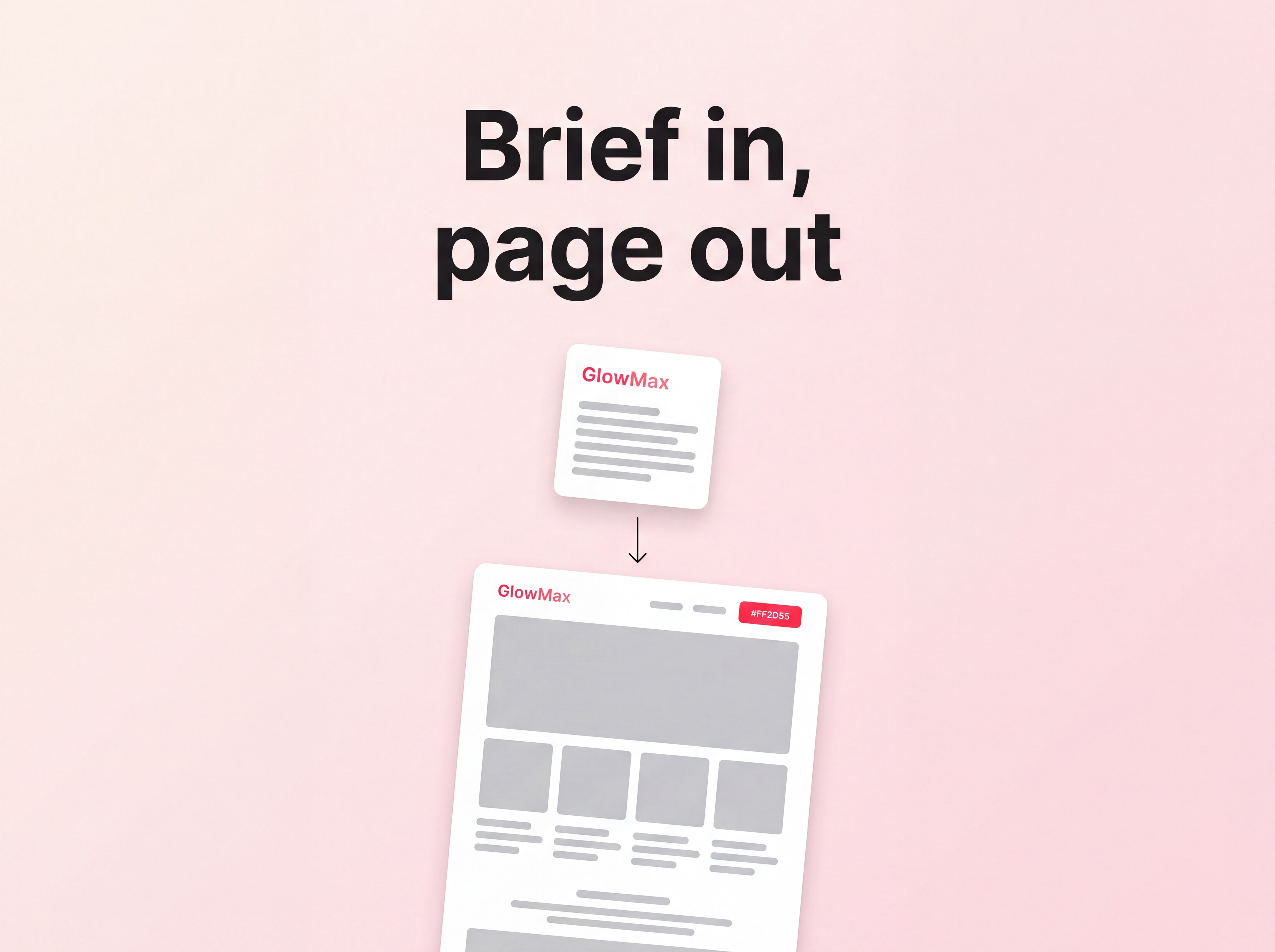
The idea is simple. You give Flunnel a product brief, you pick a proven layout, and you tell it who you are selling to. In one guided run, Flunnel writes a live landing page you can point ads at, then a matching email sequence to bring readers back. There is no page builder to learn, no blank canvas to fill, and no waiting on a designer.
Everything happens in four steps:
Choose a template. A structure proven for the job you are doing.
Fill in your brief. Product facts, proof, persona, and offer.
Generate. The AI writes the page first, then a matching email flow.
Review and publish. Preview it, edit any section, then push it live.
You will go through these four steps in detail in Quick Start and in the Step-by-Step Guide. For now, the important thing is that the whole job, from raw facts to a published page, lives inside one flow.
The problem it solves
Your storefront was not built to convert cold paid traffic. It was built to let people browse, compare, and shop across your whole catalog. That is the right job for a storefront, but it is the wrong job for an ad click.
A campaign landing page is the opposite. It speaks to one angle, one persona, and one offer, with no distractions pulling the visitor away from the decision you want them to make.
The catch is that building a fresh page for every angle, persona, and offer is slow, and the copy is the hardest part of all. Most teams end up doing one of two things. They point ads at a generic product page that was never written for the ad, and conversion suffers. Or they wait days for a designer and a copywriter to ship a single variant, and testing slows to a crawl.
Flunnel removes that bottleneck. You bring the facts and the strategy. Flunnel writes the copy, builds the page, and publishes it.
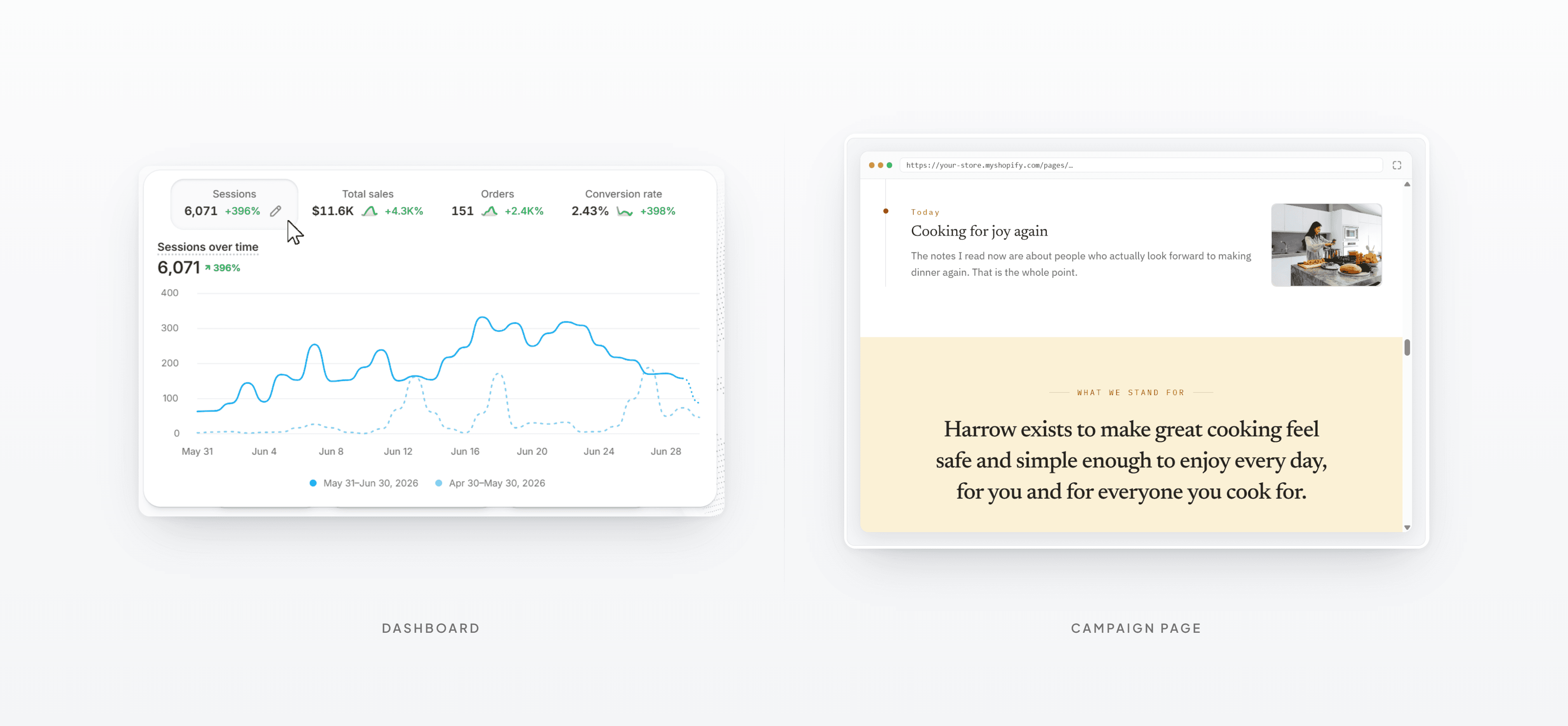
A storefront like the one above is built to show everything at once. A campaign landing page strips that back to one decision.
Who Flunnel is for
Flunnel is built for direct-to-consumer and e-commerce brands running paid traffic on Meta, Google, and similar channels, and for the marketers, growth leads, and media buyers who run those campaigns day to day.
You do not need to be a designer or a developer to use it. If you understand your product, your customer, and your offer, you have everything Flunnel needs from you. It handles the layout, the writing, and the publishing.
Reach for Flunnel whenever a campaign needs its own page. That includes a new angle you want to test, a different persona you want to speak to, or a fresh offer you want to push. The rule of thumb is straightforward: if you are spending money on clicks, every angle deserves a page written for it.
What you get
Every run produces two things, and they are matched to each other from the start.
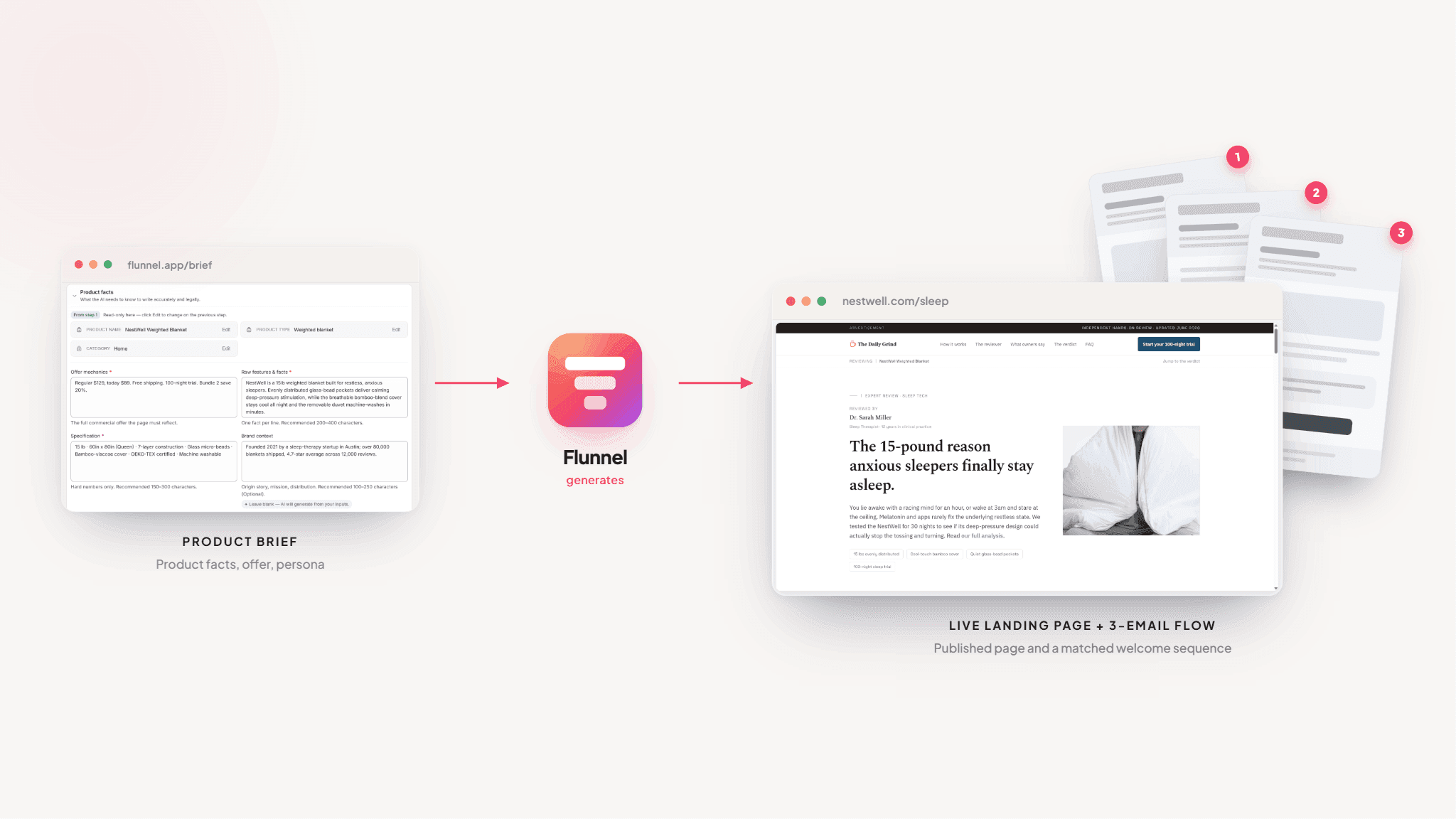
The first is a live, conversion-first landing page. It stands on its own, focused on a single angle and free of storefront distractions, and it is published right inside your Shopify online store. You can point ads at it the moment it is published.
The second is a three-email follow-up flow, made up of a Welcome email, a Value email, and an Offer email. The sequence picks up the same promise the page makes and drives readers back to convert, so the page and the inbox tell one consistent story.
Page and emails, one run, ready in minutes.
How Flunnel is different
Flunnel is not a generic website builder with AI bolted on. It is opinionated about what makes paid traffic convert, and that opinion shows up in five places.
Awareness-ladder native. Every page is written for a specific buyer awareness stage, so the page meets visitors where they actually are instead of assuming they already want to buy.
Message-match by design. A shared anchor phrase ties your ad to your page, so the visitor sees the same promise they clicked on and the click stays warm.
Framework-driven copy. Seven persuasion frameworks are built in, each with its own rules, so the argument on the page is structured on purpose rather than improvised.
Compliance-aware. Claim guardrails travel with every page, keeping sensitive claims inside the lines you set.
Multi-language. You can generate pages in your market's language out of the box.
Each of these ideas is explained in plain terms in Core Concepts. You do not need to master them before your first page, but understanding them is what turns a decent page into a page that converts.
Next step
Ready to build? Quick Start walks you from login to a published page in about five minutes.
Continue to Quick Start
Share: